In Hong Kong’s highly competitive hospitality industry, cafés, bars, and lounges must constantly innovate to attract and retain customers. Beyond offering quality food and beverages, the overall experience plays a decisive role in customer loyalty. One effective way to enhance service and brand image is by introducing self-service water stations. This simple yet impactful addition can improve convenience, highlight a commitment to health, and deliver long-term operational benefits.
Advantages of Self-Service Water Stations
Cafés
Customers often spend extended periods in cafés, whether working, socializing, or relaxing. Easy access to clean drinking water enhances comfort and encourages longer stays. A self-service water station reduces interruptions, allowing guests to focus on their activities while staff concentrate on preparing specialty drinks and food. This thoughtful detail strengthens the café’s reputation as a customer-centric space.
Bars
Bars thrive on atmosphere and efficiency. A self-service water station ensures patrons can hydrate freely, complementing their beverage choices without waiting for staff. It helps bartenders focus on crafting cocktails and managing peak-hour demand, improving overall service speed. Offering premium filtered water also reflects a bar’s commitment to quality and customer well-being.
Lounges
Lounges are designed for relaxation and convenience. A self-service water station aligns perfectly with this concept, giving guests autonomy over their refreshment needs. Whether in a hotel lounge or private club, the ability to access chilled, hot, or even sparkling water enhances the sense of luxury and comfort. This feature reinforces the lounge’s brand image as a refined, customer-focused environment.
Benefits of Installing a Water Filtration System
Pairing a self-service water station with a professional filtration system maximizes its value:
Operational Efficiency: Staff spend less time refilling water, allowing them to focus on core service tasks.
Superior Beverage Quality: Filtered water improves the flavor of coffee, tea, and cocktails while ensuring safety.
Brand Differentiation: Premium water service signals attention to detail and care for customer health.
Cost Savings: Filtration reduces scale buildup in equipment, extending the lifespan of coffee machines, ice makers, and dishwashers.
Recommended Solutions: Life Solutions
For cafés, bars, and lounges seeking reliable water solutions, Life Solutions offers advanced systems tailored to commercial needs:
Billi Quadra Series: Compact yet powerful, delivering instant hot and chilled water with safety features and leak detection.
Billi Sparkling Series: Adds sparkling water functionality, offering guests a refreshing and diverse drinking experience.
Custom Commercial Systems: A wide range of filtration solutions designed to meet different venue sizes and requirements.
Life Solutions stands out with its in-house technical team, ensuring fast response, strict quality control, and 24/7 professional support. From installation to maintenance, every solution is customized to client needs.
Electrolyzed water machines have become increasingly popular in Hong Kong and across Asia, often marketed as a revolutionary solution for health and wellness. But what exactly is electrolyzed water, and does it truly deliver the benefits that many claims suggest? In this article, we take a professional and neutral look at the science, advantages, and drawbacks of electrolyzed water, while also exploring safer and more reliable alternatives for businesses.
Understanding Electrolyzed Water
Electrolyzed water is produced by passing an electric current through tap water. This process separates the water into two types:
Alkaline electrolyzed water: Rich in minerals such as calcium, magnesium, and sodium, often promoted for drinking.
Acidic electrolyzed water: Contains ions like chloride and nitrate, with oxidizing properties, commonly used for cleaning and disinfection.
In simple terms, electrolyzed water is regular tap water that has been treated to create two streams with different chemical properties.
Claimed Benefits of Electrolyzed Water
Electrolyzed water is often advertised with claims such as:
Improving body constitution by balancing acidity and alkalinity
Neutralizing harmful free radicals
Boosting immunity and overall health
However, scientific evidence remains limited:
While some laboratory studies suggest electrolyzed water can reduce free radicals in test environments, there is insufficient clinical evidence to confirm the same effect inside the human body.
The human body naturally maintains acid-base balance through complex physiological mechanisms. Drinking alkaline water alone does not alter overall pH levels.
Limitations and Drawbacks
Despite its popularity, electrolyzed water has several limitations:
Lack of scientific proof: Health claims are not yet supported by robust clinical studies.
High cost: Electrolyzed water machines are expensive to purchase and maintain.
Water quality concerns: If the source water contains impurities, electrolysis may not remove them effectively, potentially compromising safety.
For daily hydration, the most important factors remain purity, safety, and adequate intake.
A Reliable Alternative: Commercial Water Filtration
Businesses seeking safe and sustainable drinking water solutions do not need to rely on electrolyzed water. Life Solutions offers advanced commercial water filtration systems designed to deliver consistently pure water:
Multi-stage filtration: Activated carbon, reverse osmosis, and UV sterilization ensure water is clean and safe.
International certifications: All products meet global water quality and energy efficiency standards.
Trusted by enterprises: Over 2,000 corporate clients, including multinational companies and local SMEs, rely on Life Solutions for office hydration.
Flexible options: Floor-standing, countertop, and faucet-integrated dispensers to suit different workplace needs.
Conclusion
Electrolyzed water continues to attract attention, but its health benefits remain unproven. For businesses, the priority should be providing employees with safe, pure, and sustainable drinking water. Life Solutions’ commercial filtration systems offer a proven, cost-effective, and environmentally responsible solution.
As modern living standards improve, people are paying more attention to the quality of their drinking water, with increasing demand for clean, safe and pure water. In recent years, Reverse Osmosis (RO) water filters and dispensers have gained widespread popularity due to their ability to effectively remove impurities and contaminants from tap water, delivering high-quality drinking water.
But how exactly does RO technology work to turn regular tap water into pure water? This article will explain the principles behind RO systems and highlight the top three reasons for their popularity.
How Does an RO Water Filter Work?
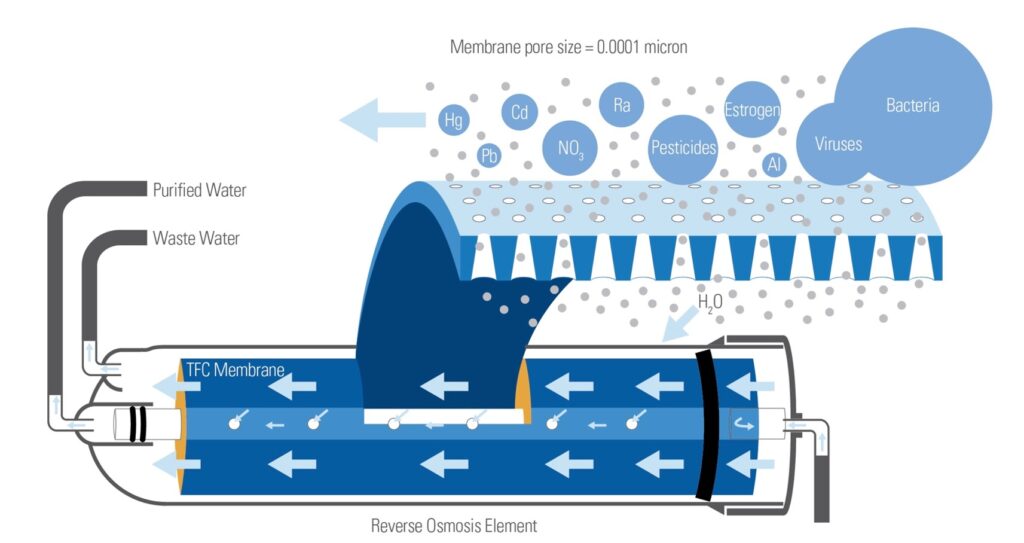
RO, or Reverse Osmosis, is a highly efficient water treatment technology. It uses the principle of osmotic pressure to allow only water molecules to pass through a semi-permeable membrane, while contaminants are blocked and expelled.
The RO membrane has an extremely fine pore size of just 0.0001 microns, which effectively filters out bacteria, viruses, heavy metals, pesticides and other harmful substances. When tap water enters the RO filtration system, pressure is applied to push pure water molecules through the membrane, producing clean water while discharging the concentrated waste containing impurities. This process, called “reverse osmosis,” ensures the delivery of fresh and drinkable pure water.
Top 3 Reasons for the Popularity of RO Water Filters
1. Powerful Purification Capabilities
The core component of an RO water filter is the reverse osmosis membrane. It efficiently blocks harmful substances such as bacteria, viruses, heavy metals, and pesticides. Additionally, it removes scale, rust, sediment, and other impurities from the water, ensuring exceptionally pure output that meets high drinking water standards.
2. Consistent Water Quality
RO water filters maintain stable purification regardless of fluctuations in the quality of the water source. Whether tap water contains excessive chlorine or the source water is polluted, RO systems reliably remove impurities and contaminants. With multi-stage filtration systems and high-performance RO membranes, these filters ensure that every drop meets strict purification standards, providing safe drinking water without concerns about changes in water quality.
3. Convenience and Ease of Use
RO water filters are easy to operate. With just a press of a button, users can dispense water without complicated steps. Many RO water dispensers are equipped with dual-temperature functionality, providing both hot and cold water to meet diverse needs. Whether it’s hot water for tea or coffee or cold water for quenching thirst, these systems deliver convenience for daily use.
Electrolysed water, ionised water and alkaline water have been active actively promoted in commercials for years. There are claims that these types of water offer health benefits, including disease and cancer prevention. What are the principles behind these claims?
Despite the differing names, common types of electrolysed water, such as alkaline and ionised water, are produced through electrolysis and membrane separation. The main difference lies in their pH levels. Electrolysed water is created by using a membrane or salt bridge during electrolysis to prevent ion exchange, altering the pH and oxidation-reduction potential (ORP) of the water. This process produces acidic and alkaline water.
While acidic and alkaline electrolysed water is promoted for consumption, electrolysed water like hypochlorous acid water is more commonly used for cleaning, disinfection, and sterilisation. Some believe drinking acidic or alkaline water can adjust the body’s pH balance, but this is a misconception. The human body automatically maintains its pH balance, and neither food nor water can significantly alter blood pH levels.
What Is Ionised Water?
Ionised water is said to offer various benefits, such as antioxidant properties, anti-ageing effects, improved digestion, and enhanced immunity. However, scientific evidence supporting these claims is insufficient.
Ionised water undergoes a special process where electrolysis produces charged ions. Many claim these ions neutralise free radicals, thereby providing antioxidant effects. Yet, current research has not definitively proven that drinking ionised water can remove free radicals or deliver significant antioxidant benefits. Its specific impact on human health remains uncertain and subject to further study.
What Is Alkaline Water?
Many commercial brands of alkaline water claim that it can offer benefits such as neutralising bodily acidity, improving hydration and aiding detoxification. However, these claims lack robust scientific support.
The body’s acid-base balance is maintained through complex physiological mechanisms. The body naturally regulates pH to ensure normal functioning and consuming alkaline water alone does not significantly alter overall pH levels. As explained in an article by Harvard Health, the stomach’s pH ranges from 1.5 to 3.5. Drinking large amounts of alkaline water may temporarily raise stomach pH, but the kidneys will automatically regulate blood pH. Over-alkalising the body could even lead to negative health effects. Maintaining a balanced pH is crucial for proper bodily functions, and excessive alkalinity might disrupt these processes and result in adverse outcomes. It’s important to approach claims about alkaline water with caution and understand the body’s natural regulatory mechanisms before relying on such products.
What Is the Healthiest Way to Drink Water?
For everyday hydration, ensure your drinking water is safe, clean, and free of impurities. Consuming the recommended amount is sufficient to meet your body’s needs. If you’re considering long-term use of water products claiming health benefits, consult professionals such as doctors or nutritionists. They can help you assess your individual needs and the advantages or disadvantages of these products before making a decision.
Professional Water Filtration Solutions in Hong Kong
Choosing a suitable water filtration and dispenser requires you to assess factors like local water quality and specific household needs. Professional consultation can help identify the most appropriate solution. A technical team can also provide regular maintenance to ensure optimal filtration system performance and safety.
This article is for informational purposes only and does not constitute legal or medical advice. If you have any health concerns, please consult a qualified medical professional.
Water hardness varies by region, which can sometimes lead to discomfort if travellers consume the water in a new environment. According to the Hong Kong Water Supplies Department, the city’s treated tap water is categorised as soft water, containing trace minerals. Travellers from Hong Kong may occasionally experience discomfort when drinking tap water abroad, possibly due to difficulty adapting to hard water. But what exactly sets soft water and hard water apart?
How is water hardness or softness defined? What are the differences between soft water and hard water?
According to the World Health Organization (WHO), water hardness is determined by its mineral content, specifically calcium carbonate levels. The higher the calcium carbonate content per liter, the harder the water. Water hardness is classified into four levels:
Soft Water: Less than 60 mg of calcium carbonate per liter.
Moderately Hard Water: 60–120 mg of calcium carbonate per liter.
Hard Water: 120–180 mg of calcium carbonate per liter.
Very Hard Water: More than 180 mg of calcium carbonate per liter.
The Pros and Cons of Soft Water and Hard Water
Water flows through different environments on its way to your tap. It may pick up naturally occurring minerals such as magnesium and calcium, leading to a higher mineral content in the tap water, which is called “hard water.”
However, does this mean hard water is better than soft water?
Hard Water
Hard water is rich in minerals, which may contribute to the body’s daily mineral intake. Some people even prefer the taste of mineral-rich water, while others may find it too bitter as an ingredient, affecting the flavour of beverages or dishes. Yet, it is important to note that hard water does not equal commercially available “mineral water.”
Some research suggests that drinking water may reduce the risk of cardiovascular diseases. However, the World Health Organization notes that more comprehensive studies are needed to establish a clear link. On the downside, long-term consumption of hard water has been associated with hair loss. Minerals in hard water can accumulate on the surface of the hair, blocking cuticles and damaging hair health over time. Additionally, the high calcium and magnesium content in hard water can cause scale to build up, potentially clogging pipes and reducing the efficiency or lifespan of water-dependent appliances like water heaters and washing machines.
According to the Centre for Health Protection, it’s also important to note that mineral water, which contains a high concentration of minerals, may not be suitable for infants. Excess minerals can exceed the nutritional needs of babies and are not recommended for preparing infant formula.
Soft Water
Compared to hard water, soft water contains fewer minerals, which means it is less likely to irritate the skin and does not lead to scale buildup in pipes or appliances, prolonging the lifespan of the household equipment and improving performance.
Some individuals in Hong Kong express concerns that soft water may not provide enough minerals. However, the human body primarily obtains essential nutrients through food, not water. As long as you maintain a balanced diet with a variety of natural foods, there’s no need to worry about insufficient mineral intake.
What is the hardness level of tap water in Hong Kong? Is it safe to drink?
Generally speaking, Hong Kong’s treated tap water is classified as soft water and may contain trace amounts of calcium and magnesium. After prolonged use, you may notice a thin white film, known as limescale, on the bottom of the kettle. This is simply a buildup of these trace minerals and does not affect water quality or health.
Why do people still use water filters despite treated tap water?
In theory, tap water treated by Hong Kong’s Water Supplies Department is safe to drink. However, water quality can be affected by external factors like storage tanks, internal plumbing, and supply systems. Rust, sediment, bacteria, and other contaminants may mix into the water during its journey to your tap. This can alter its taste and, in some cases, pose health risks. For these reasons, many people opt for water filters or filtration systems to ensure the purity and safety of their drinking water. These systems remove impurities, ensuring clean, high-quality water at home.
Professional water filtration systems in Hong Kong
Choosing the right water filtration and dispenser system depends on factors such as the water quality in your location and your household’s specific needs. Professional consultation services can help identify the best solution tailored to your requirements. A technical team can also provide regular maintenance to keep the filtration system performing at its best.
This article is for informational purposes only and does not constitute legal or medical advice. For any health concerns or questions, please consult a qualified medical professional.
Maintenance matters: when it comes to water filters, quality servicing is absolutely key.
Hong Kong-based Life Solutions has been specialising in providing safe, clean drinking water via water filtration systems for almost two decades. They service a broad range of clients, from homes and offices to large-scale events like the Rugby Sevens and even the Hong Kong International Airport. We sat down with founder Blake Ireland about how he came to start the company, why water filtration maintenance is vital, and how we can each take action to ensure that we’re consuming high-quality safe drinking water.
GQ: How did you come to start Life Solutions?
BI: One thing that has always been a “bête noire” for me is the use of disposable plastic water bottles and the damage they do to the environment. The bottled water industry is one of the most polluting industries in the world. There is no excuse for shipping water across continents for the purposes of drinking, especially given that with proper filtration and good maintenance, we can enjoy the fresh water we have locally. Bottled water also comes at an enormous financial cost. In some cases, it is sold for higher prices than a litre of petrol. Having come from the construction trade, it was a fairly logical step for me to go into water filtration and persuade people to use these systems for drinking water, rather than buying bottles.
GQ: Maintenance is a huge part of what you offer. Why is servicing water filters so important?
BI: Much like with a car, it doesn’t matter how expensive, or high-quality it is, if you don’t maintain it properly. Take a luxury Rolls Royce, for example. You probably wouldn’t take it down to any old mechanic down the street. Instead, you’d want to take it to a Rolls Royce dealer or a licensed mechanic where they have the right machinery, they know how the car works and they have the proper parts. Maintenance in water filtration is the same thing. It doesn’t matter what type of filter or technology you use, whether it is carbon filtration, or ultraviolet (UV) sterilisation, or reverse osmosis (RO). It doesn’t matter if you buy the most expensive or the best brand, without professional maintenance, it won’t do its job properly.
GQ: How often should your filter be serviced? Does it depend on the type of water filter you have?
BI: Servicing frequency very much depends on the type of filtration you are using. RO membranes can last up to 3 years, especially if they are NSF-certified. With micro-filters, or carbon filters which are commonly used for drinking water, you may need to change it every few months, or even every month, depending on the amount of water that goes through the cartridge.
We have hospitality clients in Macau that use such high amounts of water that their carbon filters need to be replaced on a monthly basis. For businesses that use less water, filters can be changed every 6 months. It really depends on the quality of the source water, the volume of water going through the system and the capacity of the filter types.
Blake Ireland, Founder of Life Solutions & Water Filtration Expert (Source: Life Solutions)
GQ: What are some of the most common misconceptions about Hong Kong water?
BI: There are quite a few misconceptions amongst the general public, the most prevalent of which is that Hong Kong water is not good quality. The city’s Water Supplies Department (WSD) provides water to every building well within the World Health Organisation (WHO) standards, and it’s as good as any world-class city such as London, Paris or New York.
Issue arises after the water enters a building and goes into the building’s pipework system. If not maintained properly by the management of that specific building, then contamination can occur. That being said, in most cases, the city’s buildings are managed pretty well.
Another common misconception is with the piping – many people believe that the pipes are made of lead, which then contaminates the water. In fact, the government changed all the old lead piping into copper, stainless steel or plastic quite some time ago.
These misconceptions may exist because the taste of Hong Kong water isn’t particularly good. The reason for this is that the Hong Kong government like most governments, adds chlorine into the water as a disinfectant. It is required to kill harmful bacteria and viruses. In terms of quality, Hong Kong tap water is safe to drink, and the taste can be improved by removing the chlorine with filtration systems at point of use (POU), in other words just before the draw point.
GQ: Is it true that the majority of water you test is actually dirtier than it was before?
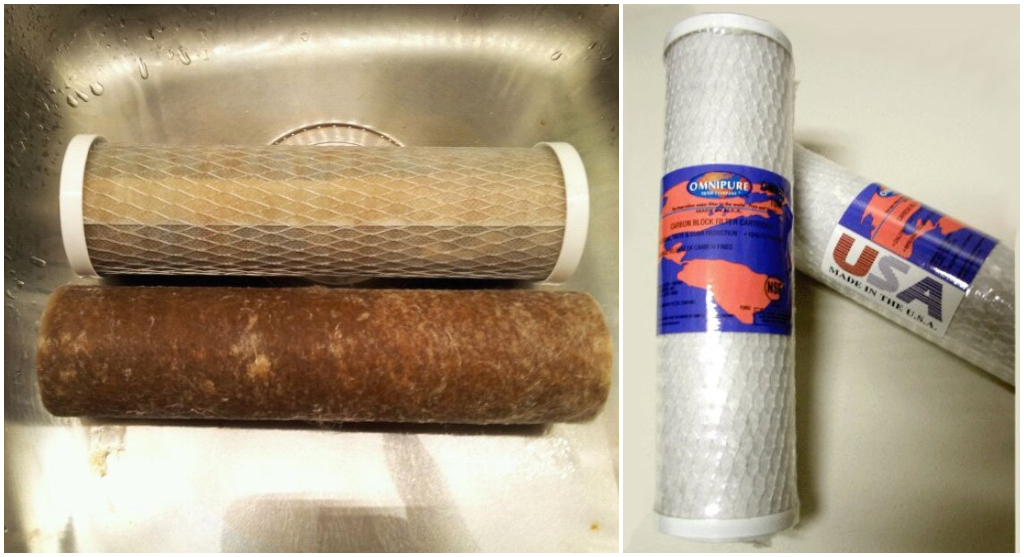
BI: Obviously we do a lot of water testing for companies and individuals here. In fact, we provide this as a free service. When we go to a building to test an existing filtration system, we find that the water that comes out of the filtration system is dirtier than the source water. This is true for about 90% of the installed micro filtration (carbon) systems that we have tested. Usually, this is because the water filter hasn’t been changed frequently enough. This is the reason why good quality, professional maintenance is so important!
Here’s what a dirty water filter looks like (left), next to a brand new one.
BI: People can take action by getting more professional advice. In too many cases, people install systems themselves, or via their contractor, and therein lies the problem. They might not necessarily know how often to change the filter and how to maintain it. There are a number of companies in Hong Kong that provide ongoing maintenance service, of which Life Solutions is one. We proactively contact our users to let them know we need to change their filter. If anyone has a system installed and wants to know if it’s working properly, we provide free professional water testing to ensure that the water meet the WHO safety standards.
GQ: How important is water quality in terms of fighting public health threats such as the current coronavirus pandemic?
BI: I think the pandemic has shed light on maximising general hygiene, not only with water. Obviously, water is a medium in which bacteria can be communicated. Though there is no specific data regarding the transmission of Covid-19 by water, various other viruses and bacteria can be transmitted through water so it’s important to make sure that any drinking water filtration system is capable of combating these pathogens.
Chlorine is an efficient way to treat water, which is why so many governments deploy it. The Hong Kong government has increased the level of chlorine since the pandemic began to ensure that if the virus does get into the water supply, the drinking water will be sufficiently disinfected.
Another way is through UV sterilisation, and indeed RO membrane technology and nano-filtration systems are 99.9% effective at removing bacteria and potential viruses.
As always, it depends on the system you use and more importantly, it depends on a the quality and frequency of the maintenance.
GQ: You work with big event organisers like the Rugby Sevens and Clockenflap – what are the requirements for safe water on a large scale?
BI: For large events, the drinking water on the premises must comply with WHO standards for drinking water. There are certain criteria for potable water, such as a maximum amount of bacteria, metals, various chemicals and PH. Depending on the event that we are working for, we measure the water quality at that location and employ the relevant filtration system to make sure that the water complies with WHO standards.
GQ: You also work with the Hong Kong International Airport. Can you tell us more about what they require?
BI: Every one of our clients has slightly different requirements. In the case of the Hong Kong International Airport (HKIA), we have a very stringent requirement for quality. They provide systems for passengers so it’s extremely important that this is safe and of the correct quality, and that it fulfils all WHO requirements. For these we use a combination of micro-filtration and UV sterilisation to achieve the desired results. We also have a dedicated servicing team for the airport that is on call 24/7.
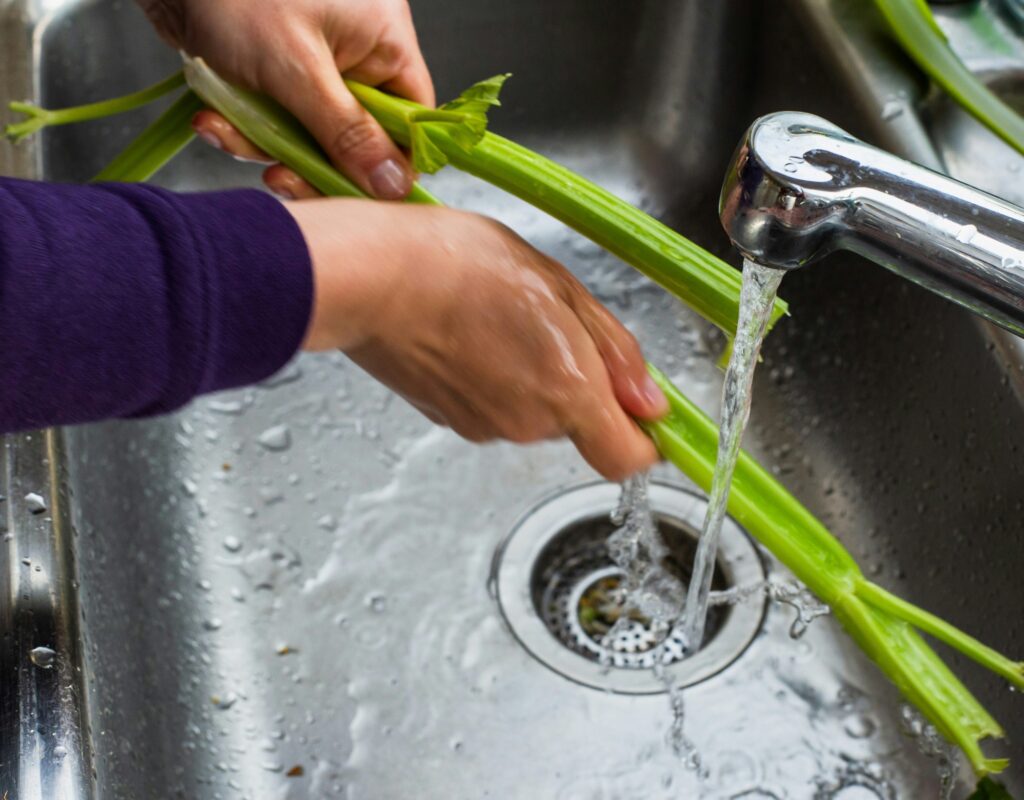
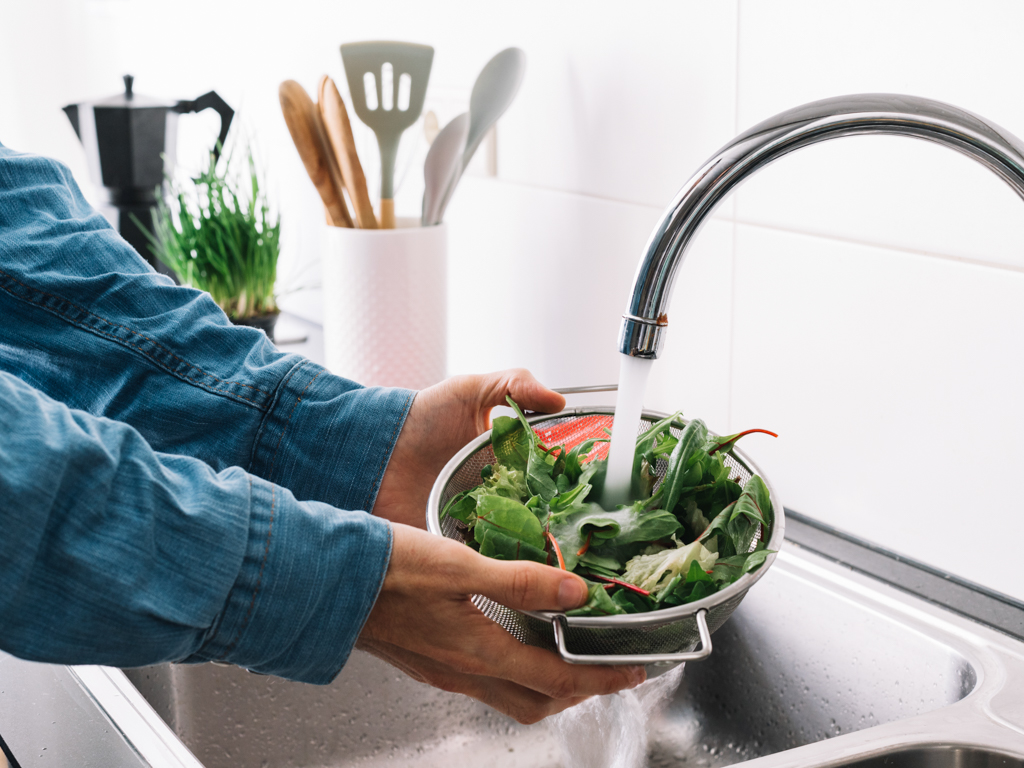
When you are washing your food, you want your water to be as clean as possible. (Source: Freepik)
For most of our other residential and corporate clients, we use membrane technology. Although it is more expensive, it does offer greater safety measures- if the water drops below a certain standard, the output will be stopped by the filtration system, the RO membrane. The drawback of such systems is that the filtration process is quite slow, so most of them require a storage tank for consistent capacity. For a client like the airport, where the system needs to generate thousands of litres of water a day, RO is not practical as they would need to have large storage tanks on tap whenever a passenger comes along and presses the button.
GQ: From lead contamination scandals to the current epidemic, is the general public more aware about safe drinking water now than ever?
BI: A few years ago, there were high levels of lead in the water in a public housing estate that was caused by cheap lead-containing solder – the glue that is used to join together the pipes. This absolutely raised people’s awareness about water, but it may have been counterproductive. As we already discussed, there is a general misconception that government water supply is not particularly good, which isn’t true. So in some cases, these scandals have heightened a misconception when it was in fact an isolated case.
In terms of the current pandemic, it is certainly raising more awareness. People are more conscious of hygiene, whether in terms of wearing masks, washing hands, ingesting food, or water quality. This is extremely important as we live in an ever-increasingly populated world and these issues will become more, not less frequent. I hope Covid-19 serves as a wake-up call and makes us look at what we’re doing as a species, so we can change some of our habitsfor the better.
Meet the Waterlogic WL7 Firewall, the water dispenser built for modern workplaces. Engineered for performance, designed for safety, and packed with innovation—it’s the ultimate hydration solution for busy teams.
Why Choose WL7?
99.999% COVID-secure with patented Firewall™ UV purification
5 water options (hot, ambient, cold, chilled, sparkling) from one sleek machine
Instant Ice Bath chilling for refreshingly cold water
Hands-free operation with intuitive foot pedals
Available in freestanding & countertop models
Next-Level Purification
The WL7 doesn’t just filter—it defends.
Advanced Filtration removes chlorine, tastes, and odors.
Firewall™ UV Purification neutralizes bacteria and viruses right at the nozzle.
BioCote® Antimicrobial Protection keeps the dispense area hygienic all day.
Tested by microbiologists at the University of Arizona, Firewall™ has been proven to inactivate COVID-19 with over 99.999% effectiveness.
Touchless Convenience
Stay safe with pedal-powered dispensing. One pedal selects your water type, the other dispenses—no hands required.
The WL7 Firewall™ Advantage
✔ Safe, purified water on demand ✔ Stylish, user-friendly design ✔ Proven technology trusted worldwide
The WL7 Firewall™ delivers more than water—it delivers peace of mind. Upgrade your workplace hydration today.