How RO Water Filters Work and Why People Love Them

As modern living standards improve, people are paying more attention to the quality of their drinking water, with increasing demand for clean, safe and pure water. In recent years, Reverse Osmosis (RO) water filters and dispensers have gained widespread popularity due to their ability to effectively remove impurities and contaminants from tap water, delivering high-quality drinking water.

But how exactly does RO technology work to turn regular tap water into pure water? This article will explain the principles behind RO systems and highlight the top three reasons for their popularity.

How Does an RO Water Filter Work?

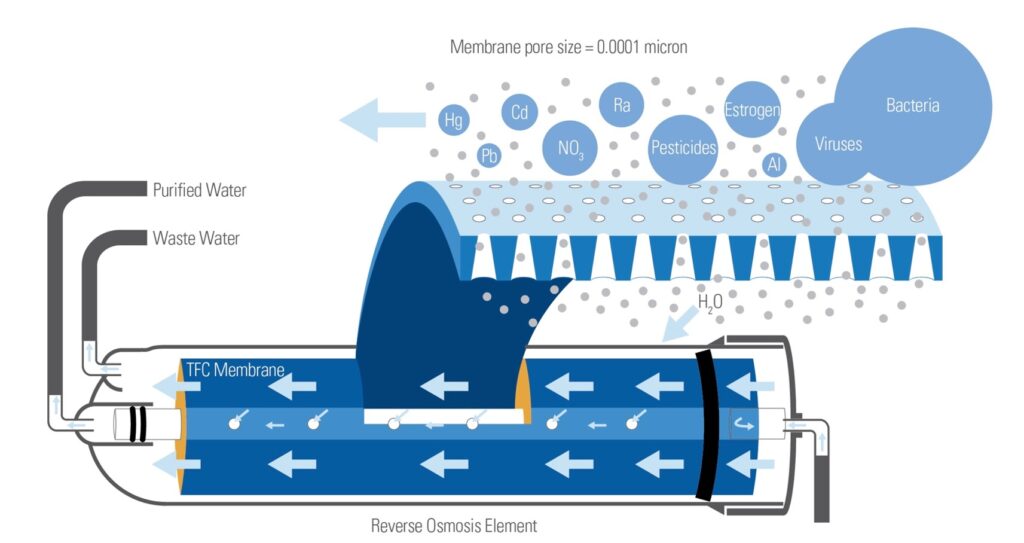
RO, or Reverse Osmosis, is a highly efficient water treatment technology. It uses the principle of osmotic pressure to allow only water molecules to pass through a semi-permeable membrane, while contaminants are blocked and expelled.

The RO membrane has an extremely fine pore size of just 0.0001 microns, which effectively filters out bacteria, viruses, heavy metals, pesticides and other harmful substances. When tap water enters the RO filtration system, pressure is applied to push pure water molecules through the membrane, producing clean water while discharging the concentrated waste containing impurities. This process, called “reverse osmosis,” ensures the delivery of fresh and drinkable pure water.

Top 3 Reasons for the Popularity of RO Water Filters

1. Powerful Purification Capabilities

The core component of an RO water filter is the reverse osmosis membrane. It efficiently blocks harmful substances such as bacteria, viruses, heavy metals, and pesticides. Additionally, it removes scale, rust, sediment, and other impurities from the water, ensuring exceptionally pure output that meets high drinking water standards.

2. Consistent Water Quality

RO water filters maintain stable purification regardless of fluctuations in the quality of the water source. Whether tap water contains excessive chlorine or the source water is polluted, RO systems reliably remove impurities and contaminants. With multi-stage filtration systems and high-performance RO membranes, these filters ensure that every drop meets strict purification standards, providing safe drinking water without concerns about changes in water quality.

3. Convenience and Ease of Use

RO water filters are easy to operate. With just a press of a button, users can dispense water without complicated steps. Many RO water dispensers are equipped with dual-temperature functionality, providing both hot and cold water to meet diverse needs. Whether it’s hot water for tea or coffee or cold water for quenching thirst, these systems deliver convenience for daily use.
Office Water Dispenser Recommendations: Company Water Dispenser Purchase Guide

Office water dispensers do more than provide drinking water. They support daily tasks like making tea and coffee, while improving employee convenience and efficiency. With the wide variety of models and styles available, choosing the best drinking water machine for your office requires careful evaluation of your needs and selecting a reliable solution.

What to Consider When Purchasing an Office Water Dispenser

Selecting the right drinking water machine for office use involves weighing several important factors. Keep the following points in mind when making your decision:

Office Size and Headcount

Different water dispensers offer varying supply capacities. Assess the number of employees and their daily water consumption to determine the most suitable model. High-capacity floor-standing dispensers are ideal for large offices, while compact countertop units work well in smaller spaces. For larger teams with high demand for drinking water, bottleless dispensers are particularly advantageous, ensuring consistent access to workplace hydration without the hassle of replacing heavy bottles.

Budget

Beyond the initial purchase price, consider ongoing costs such as water filter replacements, inspections, and spare parts. Service providers may use different pricing models, so review contracts carefully to avoid unexpected expenses. A clear understanding of long-term costs will help you select the most cost-effective solution.

Functions

Modern dispensers offer more than just hot and cold water. Many provide room-temperature and sparkling options, along with advanced features such as boiling sterilisation, touchless sensors, and sustainability trackers that measure plastic savings. Identifying your office’s specific requirements in advance ensures you choose the best water dispenser system that enhances convenience and encourages healthy hydration habits for the workplace. Consulting with professional advisors can help match features to your workplace needs.

After-Sales Service

Unlike standard appliances, water dispensers require regular maintenance to ensure filtration effectiveness. Water filters must be replaced periodically, and hose components may wear over time. When selecting a supplier, confirm that they provide comprehensive after-sales support, including timely maintenance, spare parts, and professional servicing, maintaining peak performance for your water filtration and dispenser.

Office Water Dispenser Recommendation: Life Solutions – Hong Kong’sProfessional Brand

Life Solutions is the exclusive distributor in Hong Kong, China, and Macau for several internationally renowned water purification and dispenser brands, including Australia’s Billi, Taiwan’s ACUO, and the UK’s Waterlogic. All products meet multiple international standards for water quality and energy efficiency, serving more than 2,000 enterprises across hospitality, offices, healthcare, education, and airports.

Our office and commercial water dispensers feature advanced filtration systems and patented UVC technology, ensuring safe, pure drinking water for everyday use. Bottleless models eliminate the need for heavy carboy replacements while maintaining exceptional water quality.

Supported by our in-house technical team, Life Solutions provides end-to-end service—from consultation and planning to installation and scheduled maintenance. We also offer complimentary repair services during the warranty period and a 24-hour customer hotline for prompt technical support.

For businesses of all sizes, our range of office water dispensers delivers high-quality hydration with advanced filtration and reliable service. To learn more about purchasing, installation, or maintenance, contact Life Solutions today.

Alkaline Water and Ionised Water: What’s the Difference?

Electrolysed water, ionised water and alkaline water have been active actively promoted in commercials for years. There are claims that these types of water offer health benefits, including disease and cancer prevention. What are the principles behind these claims?

Despite the differing names, common types of electrolysed water, such as alkaline and ionised water, are produced through electrolysis and membrane separation. The main difference lies in their pH levels. Electrolysed water is created by using a membrane or salt bridge during electrolysis to prevent ion exchange, altering the pH and oxidation-reduction potential (ORP) of the water. This process produces acidic and alkaline water.

While acidic and alkaline electrolysed water is promoted for consumption, electrolysed water like hypochlorous acid water is more commonly used for cleaning, disinfection, and sterilisation. Some believe drinking acidic or alkaline water can adjust the body’s pH balance, but this is a misconception. The human body automatically maintains its pH balance, and neither food nor water can significantly alter blood pH levels.

What Is Ionised Water?

Ionised water is said to offer various benefits, such as antioxidant properties, anti-ageing effects, improved digestion, and enhanced immunity. However, scientific evidence supporting these claims is insufficient.

Ionised water undergoes a special process where electrolysis produces charged ions. Many claim these ions neutralise free radicals, thereby providing antioxidant effects. Yet, current research has not definitively proven that drinking ionised water can remove free radicals or deliver significant antioxidant benefits. Its specific impact on human health remains uncertain and subject to further study.

What Is Alkaline Water?

Many commercial brands of alkaline water claim that it can offer benefits such as neutralising bodily acidity, improving hydration and aiding detoxification. However, these claims lack robust scientific support.

The body’s acid-base balance is maintained through complex physiological mechanisms. The body naturally regulates pH to ensure normal functioning and consuming alkaline water alone does not significantly alter overall pH levels. As explained in an article by Harvard Health, the stomach’s pH ranges from 1.5 to 3.5. Drinking large amounts of alkaline water may temporarily raise stomach pH, but the kidneys will automatically regulate blood pH. Over-alkalising the body could even lead to negative health effects. Maintaining a balanced pH is crucial for proper bodily functions, and excessive alkalinity might disrupt these processes and result in adverse outcomes. It’s important to approach claims about alkaline water with caution and understand the body’s natural regulatory mechanisms before relying on such products.

What Is the Healthiest Way to Drink Water?

For everyday hydration, ensure your drinking water is safe, clean, and free of impurities. Consuming the recommended amount is sufficient to meet your body’s needs. If you’re considering long-term use of water products claiming health benefits, consult professionals such as doctors or nutritionists. They can help you assess your individual needs and the advantages or disadvantages of these products before making a decision.

Professional Water Filtration Solutions in Hong Kong

Choosing a suitable water filtration and dispenser requires you to assess factors like local water quality and specific household needs. Professional consultation can help identify the most appropriate solution. A technical team can also provide regular maintenance to ensure optimal filtration system performance and safety.

This article is for informational purposes only and does not constitute legal or medical advice. If you have any health concerns, please consult a qualified medical professional.

Soft Water vs Hard Water: How does it affect us?

Water hardness varies by region, which can sometimes lead to discomfort if travellers consume the water in a new environment. According to the Hong Kong Water Supplies Department, the city’s treated tap water is categorised as soft water, containing trace minerals. Travellers from Hong Kong may occasionally experience discomfort when drinking tap water abroad, possibly due to difficulty adapting to hard water. But what exactly sets soft water and hard water apart?

How is water hardness or softness defined? What are the differences between soft water and hard water?

According to the World Health Organization (WHO), water hardness is determined by its mineral content, specifically calcium carbonate levels. The higher the calcium carbonate content per liter, the harder the water. Water hardness is classified into four levels:

  • Soft Water: Less than 60 mg of calcium carbonate per liter.
  • Moderately Hard Water: 60–120 mg of calcium carbonate per liter.
  • Hard Water: 120–180 mg of calcium carbonate per liter.
  • Very Hard Water: More than 180 mg of calcium carbonate per liter.

The Pros and Cons of Soft Water and Hard Water

Water flows through different environments on its way to your tap. It may pick up naturally occurring minerals such as magnesium and calcium, leading to a higher mineral content in the tap water, which is called “hard water.”

However, does this mean hard water is better than soft water?

Hard Water

Hard water is rich in minerals, which may contribute to the body’s daily mineral intake. Some people even prefer the taste of mineral-rich water, while others may find it too bitter as an ingredient, affecting the flavour of beverages or dishes. Yet, it is important to note that hard water does not equal commercially available “mineral water.”

Some research suggests that drinking water may reduce the risk of cardiovascular diseases. However, the World Health Organization notes that more comprehensive studies are needed to establish a clear link. On the downside, long-term consumption of hard water has been associated with hair loss. Minerals in hard water can accumulate on the surface of the hair, blocking cuticles and damaging hair health over time. Additionally, the high calcium and magnesium content in hard water can cause scale to build up, potentially clogging pipes and reducing the efficiency or lifespan of water-dependent appliances like water heaters and washing machines.

According to the Centre for Health Protection, it’s also important to note that mineral water, which contains a high concentration of minerals, may not be suitable for infants. Excess minerals can exceed the nutritional needs of babies and are not recommended for preparing infant formula.

Soft Water

Compared to hard water, soft water contains fewer minerals, which means it is less likely to irritate the skin and does not lead to scale buildup in pipes or appliances, prolonging the lifespan of the household equipment and improving performance.

Some individuals in Hong Kong express concerns that soft water may not provide enough minerals. However, the human body primarily obtains essential nutrients through food, not water. As long as you maintain a balanced diet with a variety of natural foods, there’s no need to worry about insufficient mineral intake.

What is the hardness level of tap water in Hong Kong? Is it safe to drink?

Generally speaking, Hong Kong’s treated tap water is classified as soft water and may contain trace amounts of calcium and magnesium. After prolonged use, you may notice a thin white film, known as limescale, on the bottom of the kettle. This is simply a buildup of these trace minerals and does not affect water quality or health.

Why do people still use water filters despite treated tap water?

In theory, tap water treated by Hong Kong’s Water Supplies Department is safe to drink. However, water quality can be affected by external factors like storage tanks, internal plumbing, and supply systems. Rust, sediment, bacteria, and other contaminants may mix into the water during its journey to your tap. This can alter its taste and, in some cases, pose health risks. For these reasons, many people opt for water filters or filtration systems to ensure the purity and safety of their drinking water. These systems remove impurities, ensuring clean, high-quality water at home.

Professional water filtration systems in Hong Kong

Choosing the right water filtration and dispenser system depends on factors such as the water quality in your location and your household’s specific needs. Professional consultation services can help identify the best solution tailored to your requirements. A technical team can also provide regular maintenance to keep the filtration system performing at its best.

This article is for informational purposes only and does not constitute legal or medical advice. For any health concerns or questions, please consult a qualified medical professional.