


As modern living standards improve, people are paying more attention to the quality of their drinking water, with increasing demand for clean, safe and pure water. In recent years, Reverse Osmosis (RO) water filters and dispensers have gained widespread popularity due to their ability to effectively remove impurities and contaminants from tap water, delivering high-quality drinking water.
But how exactly does RO technology work to turn regular tap water into pure water? This article will explain the principles behind RO systems and highlight the top three reasons for their popularity.
How Does an RO Water Filter Work?
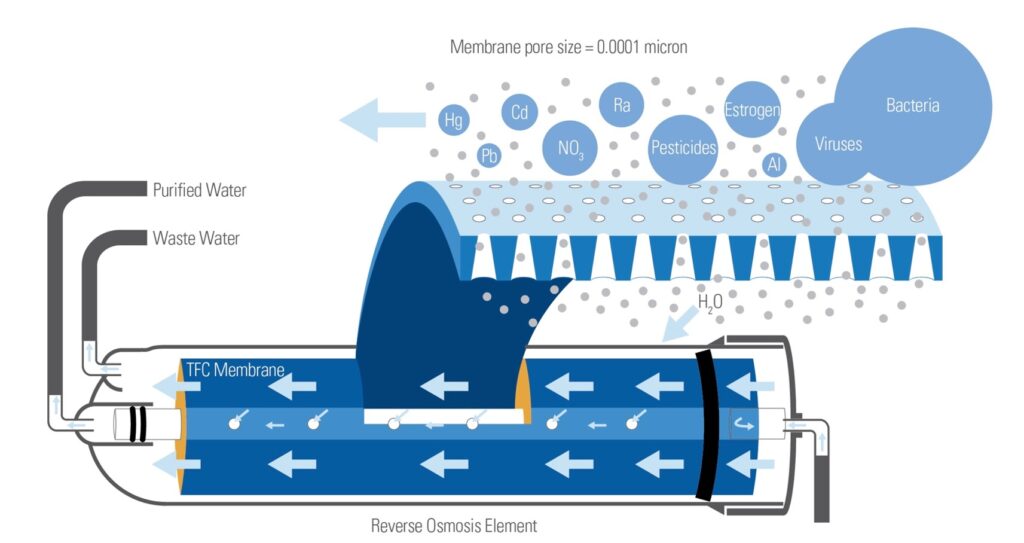
RO, or Reverse Osmosis, is a highly efficient water treatment technology. It uses the principle of osmotic pressure to allow only water molecules to pass through a semi-permeable membrane, while contaminants are blocked and expelled.
The RO membrane has an extremely fine pore size of just 0.0001 microns, which effectively filters out bacteria, viruses, heavy metals, pesticides and other harmful substances. When tap water enters the RO filtration system, pressure is applied to push pure water molecules through the membrane, producing clean water while discharging the concentrated waste containing impurities. This process, called “reverse osmosis,” ensures the delivery of fresh and drinkable pure water.
Top 3 Reasons for the Popularity of RO Water Filters
1. Powerful Purification Capabilities
The core component of an RO water filter is the reverse osmosis membrane. It efficiently blocks harmful substances such as bacteria, viruses, heavy metals, and pesticides. Additionally, it removes scale, rust, sediment, and other impurities from the water, ensuring exceptionally pure output that meets high drinking water standards.
2. Consistent Water Quality
RO water filters maintain stable purification regardless of fluctuations in the quality of the water source. Whether tap water contains excessive chlorine or the source water is polluted, RO systems reliably remove impurities and contaminants. With multi-stage filtration systems and high-performance RO membranes, these filters ensure that every drop meets strict purification standards, providing safe drinking water without concerns about changes in water quality.
3. Convenience and Ease of Use
RO water filters are easy to operate. With just a press of a button, users can dispense water without complicated steps. Many RO water dispensers are equipped with dual-temperature functionality, providing both hot and cold water to meet diverse needs. Whether it’s hot water for tea or coffee or cold water for quenching thirst, these systems deliver convenience for daily use.