Maintenance matters: when it comes to water filters, quality servicing is absolutely key.
Hong Kong-based Life Solutions has been specialising in providing safe, clean drinking water via water filtration systems for almost two decades. They service a broad range of clients, from homes and offices to large-scale events like the Rugby Sevens and even the Hong Kong International Airport. We sat down with founder Blake Ireland about how he came to start the company, why water filtration maintenance is vital, and how we can each take action to ensure that we’re consuming high-quality safe drinking water.
GQ: How did you come to start Life Solutions?
BI: One thing that has always been a “bête noire” for me is the use of disposable plastic water bottles and the damage they do to the environment. The bottled water industry is one of the most polluting industries in the world. There is no excuse for shipping water across continents for the purposes of drinking, especially given that with proper filtration and good maintenance, we can enjoy the fresh water we have locally. Bottled water also comes at an enormous financial cost. In some cases, it is sold for higher prices than a litre of petrol. Having come from the construction trade, it was a fairly logical step for me to go into water filtration and persuade people to use these systems for drinking water, rather than buying bottles.
GQ: Maintenance is a huge part of what you offer. Why is servicing water filters so important?
BI: Much like with a car, it doesn’t matter how expensive, or high-quality it is, if you don’t maintain it properly. Take a luxury Rolls Royce, for example. You probably wouldn’t take it down to any old mechanic down the street. Instead, you’d want to take it to a Rolls Royce dealer or a licensed mechanic where they have the right machinery, they know how the car works and they have the proper parts. Maintenance in water filtration is the same thing. It doesn’t matter what type of filter or technology you use, whether it is carbon filtration, or ultraviolet (UV) sterilisation, or reverse osmosis (RO). It doesn’t matter if you buy the most expensive or the best brand, without professional maintenance, it won’t do its job properly.
GQ: How often should your filter be serviced? Does it depend on the type of water filter you have?
BI: Servicing frequency very much depends on the type of filtration you are using. RO membranes can last up to 3 years, especially if they are NSF-certified. With micro-filters, or carbon filters which are commonly used for drinking water, you may need to change it every few months, or even every month, depending on the amount of water that goes through the cartridge.
We have hospitality clients in Macau that use such high amounts of water that their carbon filters need to be replaced on a monthly basis. For businesses that use less water, filters can be changed every 6 months. It really depends on the quality of the source water, the volume of water going through the system and the capacity of the filter types.
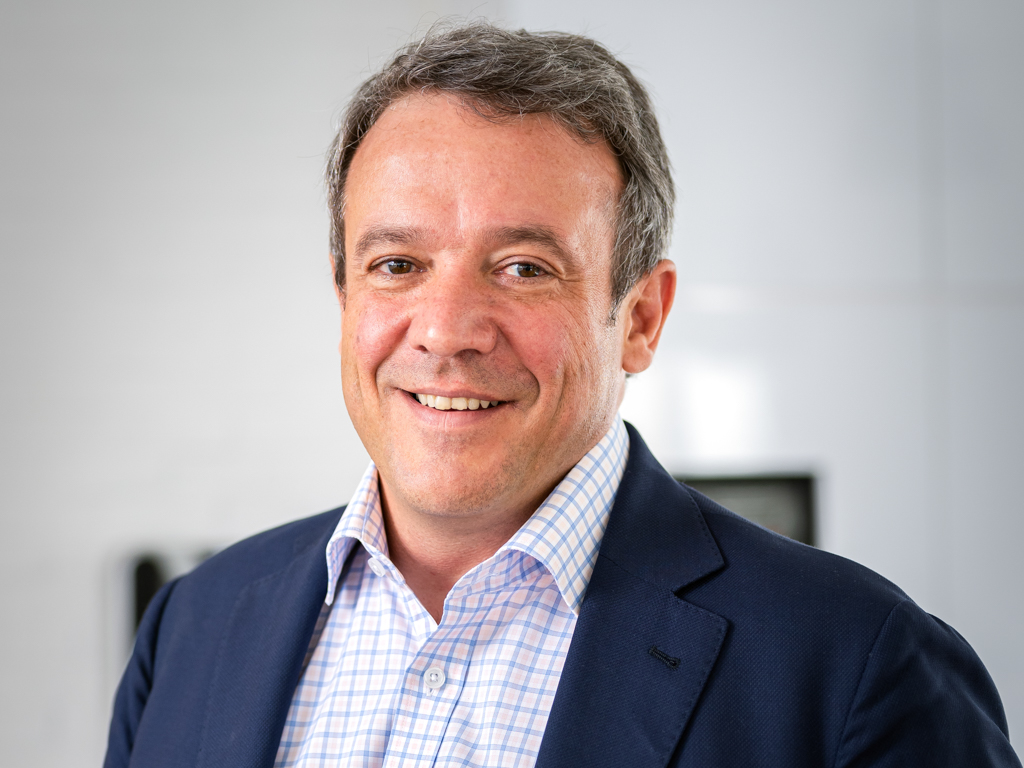
Blake Ireland, Founder of Life Solutions & Water Filtration Expert (Source: Life Solutions)
GQ: What are some of the most common misconceptions about Hong Kong water?
BI: There are quite a few misconceptions amongst the general public, the most prevalent of which is that Hong Kong water is not good quality. The city’s Water Supplies Department (WSD) provides water to every building well within the World Health Organisation (WHO) standards, and it’s as good as any world-class city such as London, Paris or New York.
Issue arises after the water enters a building and goes into the building’s pipework system. If not maintained properly by the management of that specific building, then contamination can occur. That being said, in most cases, the city’s buildings are managed pretty well.
Another common misconception is with the piping – many people believe that the pipes are made of lead, which then contaminates the water. In fact, the government changed all the old lead piping into copper, stainless steel or plastic quite some time ago.
These misconceptions may exist because the taste of Hong Kong water isn’t particularly good. The reason for this is that the Hong Kong government like most governments, adds chlorine into the water as a disinfectant. It is required to kill harmful bacteria and viruses. In terms of quality, Hong Kong tap water is safe to drink, and the taste can be improved by removing the chlorine with filtration systems at point of use (POU), in other words just before the draw point.
GQ: Is it true that the majority of water you test is actually dirtier than it was before?
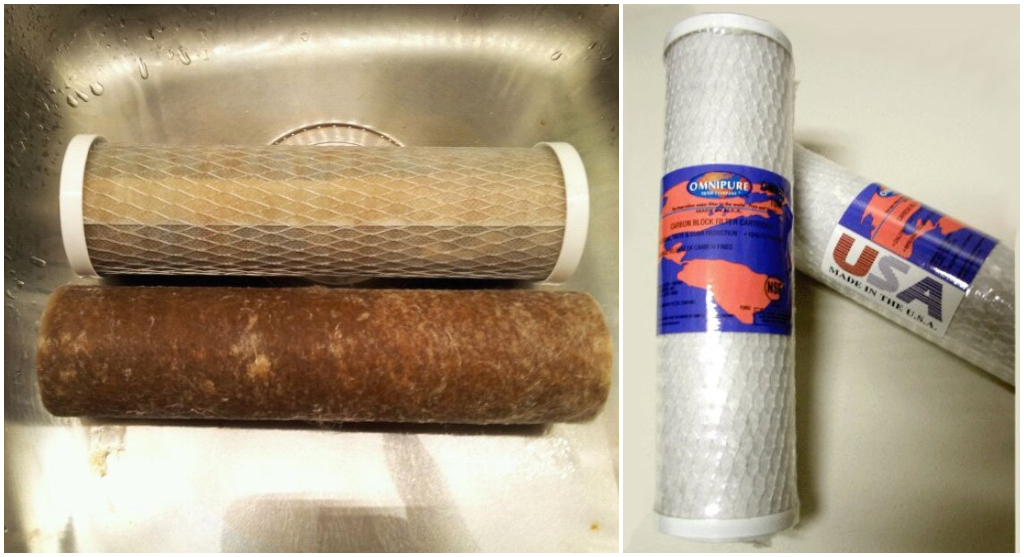
BI: Obviously we do a lot of water testing for companies and individuals here. In fact, we provide this as a free service. When we go to a building to test an existing filtration system, we find that the water that comes out of the filtration system is dirtier than the source water. This is true for about 90% of the installed micro filtration (carbon) systems that we have tested. Usually, this is because the water filter hasn’t been changed frequently enough. This is the reason why good quality, professional maintenance is so important!
Here’s what a dirty water filter looks like (left), next to a brand new one.
GQ: How can people take action on this problem?
BI: People can take action by getting more professional advice. In too many cases, people install systems themselves, or via their contractor, and therein lies the problem. They might not necessarily know how often to change the filter and how to maintain it. There are a number of companies in Hong Kong that provide ongoing maintenance service, of which Life Solutions is one. We proactively contact our users to let them know we need to change their filter. If anyone has a system installed and wants to know if it’s working properly, we provide free professional water testing to ensure that the water meet the WHO safety standards.
GQ: How important is water quality in terms of fighting public health threats such as the current coronavirus pandemic?
BI: I think the pandemic has shed light on maximising general hygiene, not only with water. Obviously, water is a medium in which bacteria can be communicated. Though there is no specific data regarding the transmission of Covid-19 by water, various other viruses and bacteria can be transmitted through water so it’s important to make sure that any drinking water filtration system is capable of combating these pathogens.
Chlorine is an efficient way to treat water, which is why so many governments deploy it. The Hong Kong government has increased the level of chlorine since the pandemic began to ensure that if the virus does get into the water supply, the drinking water will be sufficiently disinfected.
Another way is through UV sterilisation, and indeed RO membrane technology and nano-filtration systems are 99.9% effective at removing bacteria and potential viruses.
As always, it depends on the system you use and more importantly, it depends on a the quality and frequency of the maintenance.
GQ: You work with big event organisers like the Rugby Sevens and Clockenflap – what are the requirements for safe water on a large scale?
BI: For large events, the drinking water on the premises must comply with WHO standards for drinking water. There are certain criteria for potable water, such as a maximum amount of bacteria, metals, various chemicals and PH. Depending on the event that we are working for, we measure the water quality at that location and employ the relevant filtration system to make sure that the water complies with WHO standards.
GQ: You also work with the Hong Kong International Airport. Can you tell us more about what they require?
BI: Every one of our clients has slightly different requirements. In the case of the Hong Kong International Airport (HKIA), we have a very stringent requirement for quality. They provide systems for passengers so it’s extremely important that this is safe and of the correct quality, and that it fulfils all WHO requirements. For these we use a combination of micro-filtration and UV sterilisation to achieve the desired results. We also have a dedicated servicing team for the airport that is on call 24/7.
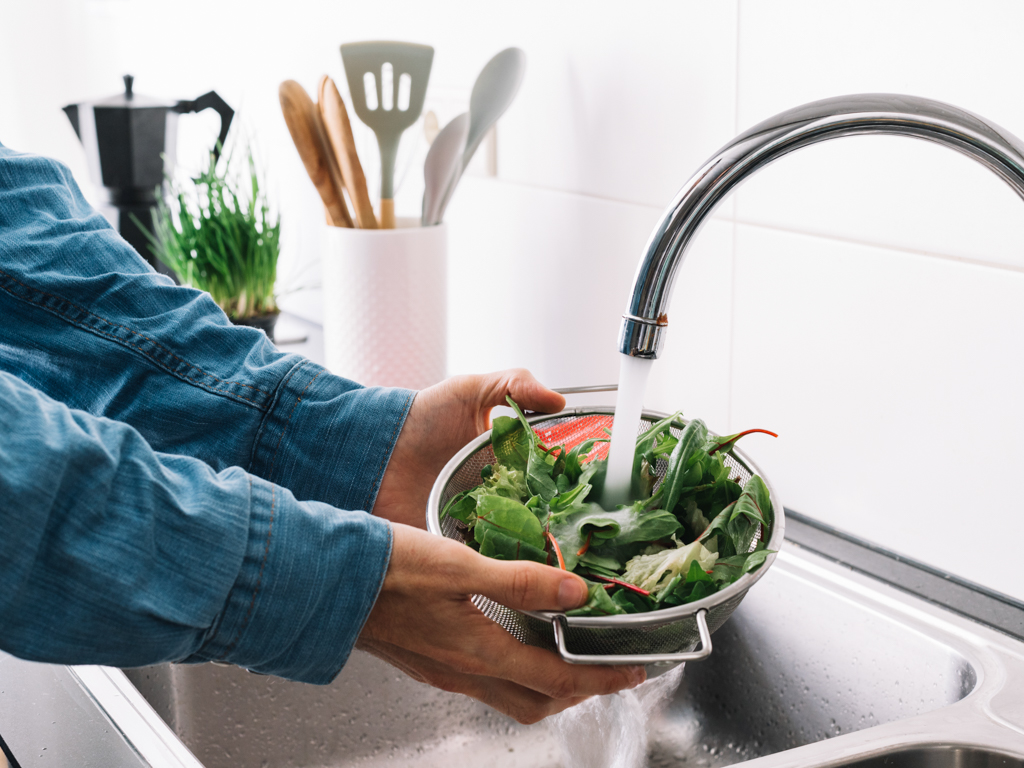
When you are washing your food, you want your water to be as clean as possible. (Source: Freepik)
For most of our other residential and corporate clients, we use membrane technology. Although it is more expensive, it does offer greater safety measures- if the water drops below a certain standard, the output will be stopped by the filtration system, the RO membrane. The drawback of such systems is that the filtration process is quite slow, so most of them require a storage tank for consistent capacity. For a client like the airport, where the system needs to generate thousands of litres of water a day, RO is not practical as they would need to have large storage tanks on tap whenever a passenger comes along and presses the button.
GQ: From lead contamination scandals to the current epidemic, is the general public more aware about safe drinking water now than ever?
BI: A few years ago, there were high levels of lead in the water in a public housing estate that was caused by cheap lead-containing solder – the glue that is used to join together the pipes. This absolutely raised people’s awareness about water, but it may have been counterproductive. As we already discussed, there is a general misconception that government water supply is not particularly good, which isn’t true. So in some cases, these scandals have heightened a misconception when it was in fact an isolated case.
In terms of the current pandemic, it is certainly raising more awareness. People are more conscious of hygiene, whether in terms of wearing masks, washing hands, ingesting food, or water quality. This is extremely important as we live in an ever-increasingly populated world and these issues will become more, not less frequent. I hope Covid-19 serves as a wake-up call and makes us look at what we’re doing as a species, so we can change some of our habitsfor the better.